
‘Let me know how I can be helpful.’
You say it. I say it. Everyone says it.
It’s a get-off-the-hook phrase. You get to seem generous, without actually doing anything.
And if somewhere were to say ‘Actually, you could invest in my company - that would help.’
Well… cue the awkwardness.

I’ve been reflecting on this luke-warm phrase. And have resolved to stop using it.
If I don’t want to help - because I’m too stretched, don’t rate the person highly enough, or simply don’t think I can help - I won’t give the platitude.
I still wish the person well.
But I’m clear on my stance.
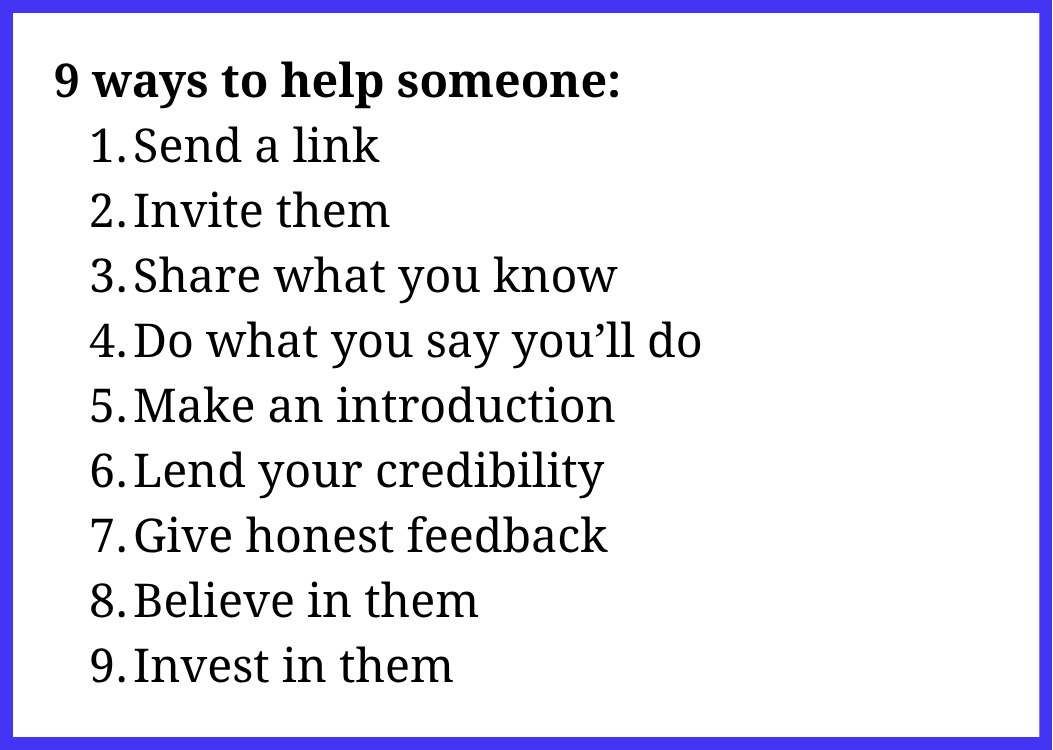
If we do want to help others, here are the things we can offer instead (in order from least valuable to most).
1. Send a link
You’re already reading things. Someone in your network would probably love those things too.
Don’t send the obvious stuff they’ve already seen. Send the thing that makes them say: ‘I’d never have found this without you.’
It can be an adjacent competitor doing something interesting.
It can be a piece of research.
It can be a joke.
Sending something specifically relevant to them shows you’re thinking of them.
2. Invite them to something
You’re going for coffee with a friend, or an industry event, or a fun run (that’s an oxymoron in my book but some people seem to find running enjoyable).
You probably know someone who’d love to be there.
Invite them.
3. Share what you know
Knowledge is cheap.
Previously, I’ve explained the basics of venture capital to dozens of people. It’s ten minutes of my time that saved them hours wading through resources of questionable quality.
These days, AI can explain it better than I can.
What’s valuable is your nuance.
AI can’t tell you which funds are the best in the country to work for, or which investor you want on your cap table, or who talks a big game but is full of it.
Voice notes are one of my favourite ways to answer questions (speedy for you - lots of nuance for them).
4. Do what you say you’ll do
This one should be obvious.
But somehow it’s still rare.
If you say you’ll send something, send it.
If you say you’ll make an introduction, make it.
If you say you’ll be at someone’s event, attend it.
It’s not cool to make people chase you.

5. Make an introduction
Double opt-in is the golden rule. Both people have to say yes to the intro.
I wrote an entire post about networking and introductions here.
Your intro could be for a potential:
- Job
- Customer
- Investor
- Coach
- Mentor
- Employee
- Expert
Or you could get personal and even do some matchmaking.
6. Lend your credibility
Writing a LinkedIn recommendation takes ten minutes. Reposting someone’s work to your network costs nothing. A warm email introduction might be the thing that opens the door.
Your credibility is a resource.
And when you spend it on good people, your credibility actually grows.
(I promise).
Think about someone in your life who consistently recommends people you should meet. If those people are great, you tend to think of the introducer even more highly.
7. Give honest feedback
Athletes are obsessed with feedback. Imagine showing up to beach volleyball practice, doing reps for an hour, and your coach just leans back and says... nothing.
You’d want your money back!

Sport teaches athletes to value feedback. After all, we’re paying for it.
But when it comes to work, we hear the word ‘feedback’ and panic.
It takes time to give feedback.
It takes effort to personalise it.
It takes care to deliver it thoughtfully.
It takes paying attention to someone’s progress.
It takes risking the relationship to offer feedback.
We wouldn’t give this time, care, and attention if we didn’t want someone to improve.
Feedback is a sign of care not criticism.
If you want to read more on how to give (and take) feedback like an athlete, see this post.
8. Believe in them
This sounds soft.
But it’s #8 for a reason.
Most people walk around with a voice in their head that says ‘are you sure you’re good enough?’ We look at others and think that they are too far ahead of us, they are smarter than us, or they are harder working than us.
Your belief may be the only thing they need to keep going:
- An out of the blue message cheering them on
- Passing on a compliment from someone who talked highly about them behind their back
- Showing up to the thing they are nervous about
- Talking them up in front of someone else
- Asking about their goals, and remembering them in your next conversation
- Looking them in the eye and saying ‘I know you’ve got this’
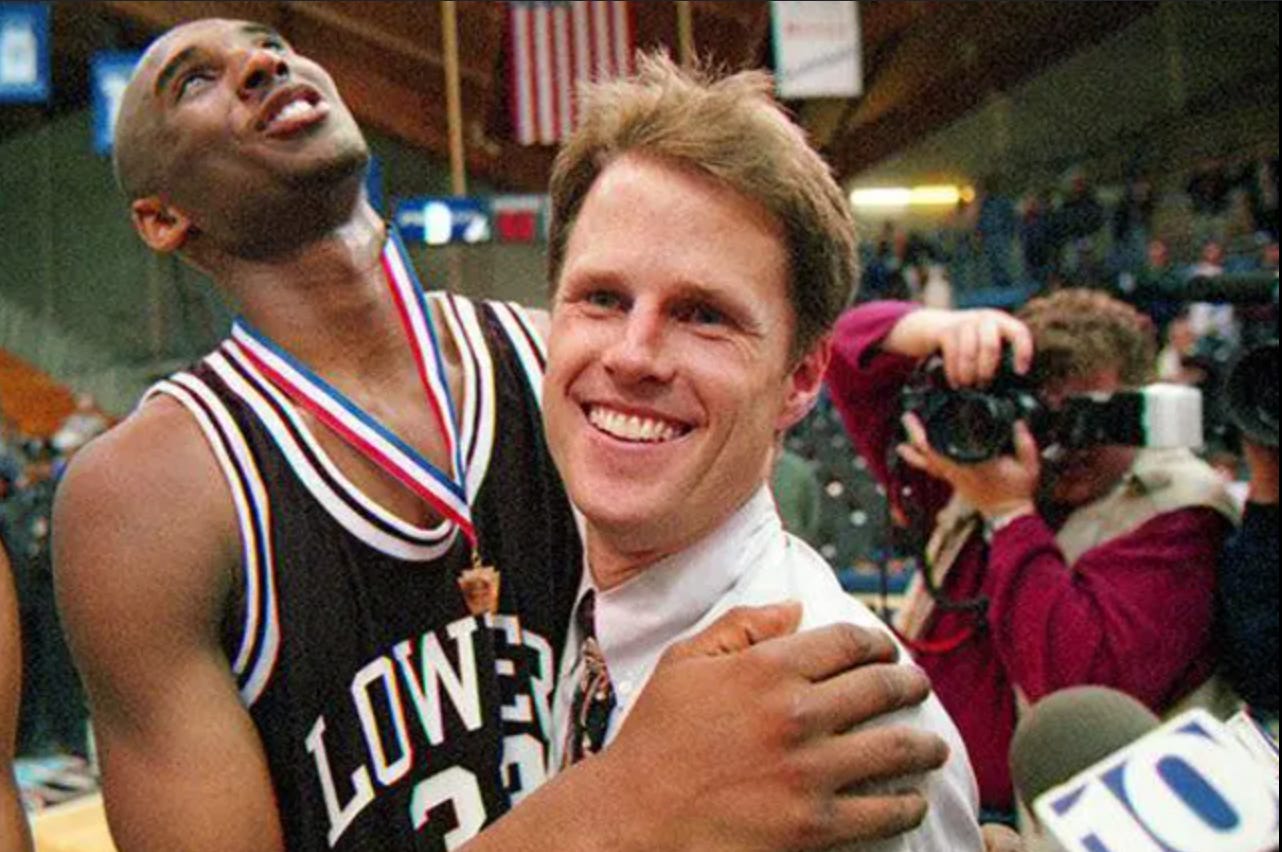
Kobe Bryant credited his high school coach, Gregg Downer, as one of the most formative relationships of his career. Not because Downer had the most sophisticated training programme. Because he believed in Kobe before Kobe had done anything to earn it.
You can do that for someone today.
It costs nothing. It can mean everything.
9. Invest in them
With your time, your attention, your network, your money.
Read what they wrote.
Be in the audience at their speaking gig.
Send them a gift to celebrate big wins.
Buy a product from their company.
Refer your friends to them.
Invest in their fundraising round.
One of my great joys right now is I’ve been able to put money into the investment funds my friends are starting.
I know what it felt like when people backed me.
I want to do the same.
Lots of us (at least on occasion) let ourselves off the hook with ‘let me know how I can be helpful’.
Many of us dabble in numbers 1-4.
A few of us go further by sharing intros and credibility in 5-6.
And a rare number of humans are consistently, genuinely helpful by going all the way up to number 9.
If you don’t want to help, don’t offer a vague promise.
If you do want to help, make it count.