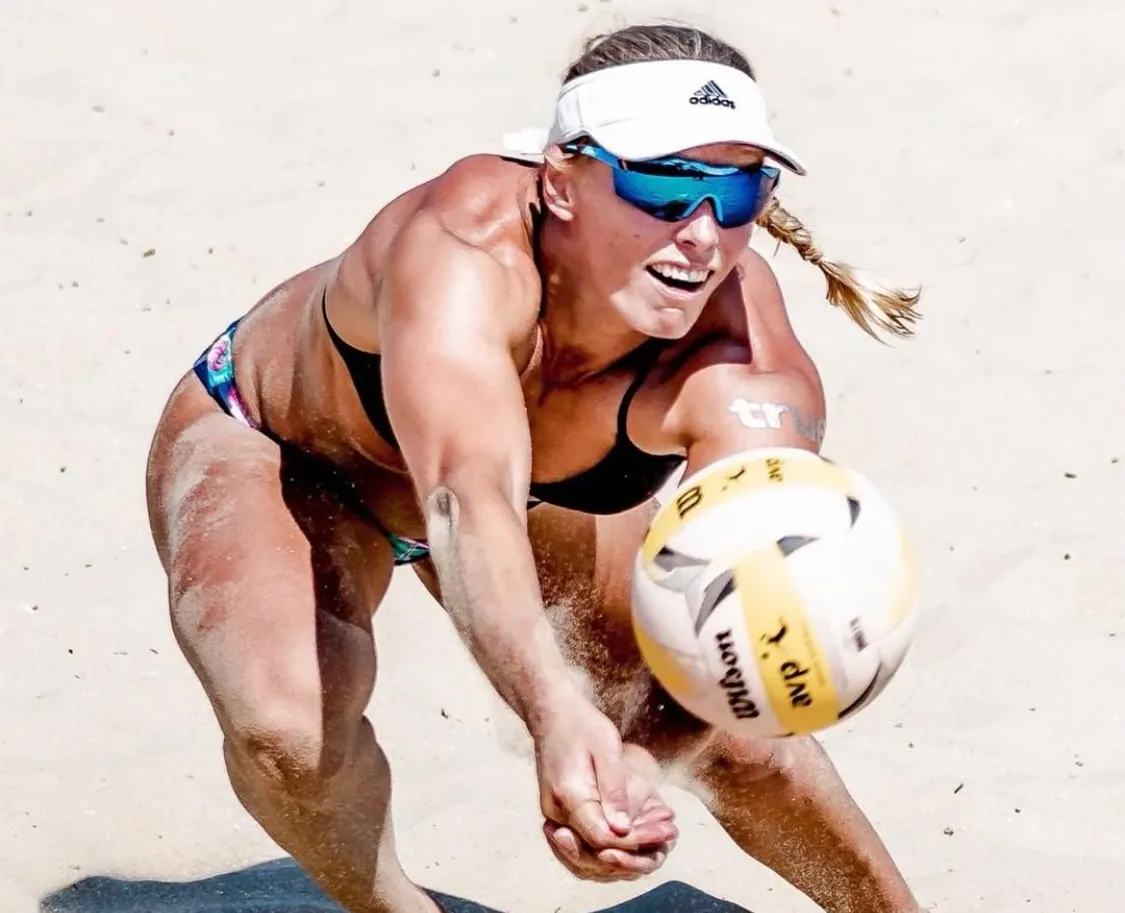
‘You’re leaving?’ my manager looked at me in disbelief. We’d worked together for 18 months and he was the best boss I’d ever had. He held my resignation letter in his hand. ‘Do you have another job offer?’
‘Nope.’ I said.
‘What? Why would you leave then?’ I could see the confusion on his face, and the hurt.
‘I want to get better at beach volleyball.’ I said
‘But you already train all the time. You’ve got a coach you work out with every morning right?’
‘Yes, but I want to get even better. And California has the best players in the world.’ I knew if I wanted to improve, I needed to play with athletes who were better than me.
‘But… How will you afford to live there?’
‘I don’t know yet,’ I said.
‘That’s so risky. You need a job surely.’
‘I’m going to see how it goes,’ I said. His expression told me he thought I was crazy.
‘Are you sure?’
I looked down at the resignation letter in his hand one more time. My heart raced out of my chest, but I kept my expression clear. I wasn’t sure at all. I was terrified. I had just $2000 in my bank account and a 1 way ticket to the USA booked.
‘Yes, I’m sure.’
And I got on the plane.
What does it take to make brave choices?
This is part 4 in a 5 part series about Bravery. Read the first three posts here:
- World-first research on bravery. 7 findings that will overturn your beliefs
- Bravery > confidence: Don’t fear less, brave more
- Bravery is not a feeling, it’s a skill. 5 techniques to master it
- The only 3 questions you need to make brave choices (this post)
- I refuse to talk about impostor syndrome (and you should too)
We’ve spoken about bravery up to this point as an immediate thing. We feel fear, and what action do we take in the next breath?
It’s a soldier running towards the sound of bullets, the moment you speak up in response to a casually racist comment in front of your friends, leaping off the edge of the bungee jumping platform, or sharing a vulnerable part of yourself.
All of that is bravery. Immediate bravery. You have to act now.
But how does bravery work when it comes to long term choices? Changing careers, moving cities or countries, deciding to have a child or not, committing to a partner, breaking up with a friend, dropping out of college, publishing a book, and many other major choices.
That’s what this blog is about.
Let’s dive into the exact toolkit you need to make brave choices.
You only need 3 questions.
Question 1: What’s the worst that could happen?
When you tell people you’re quitting your job, moving countries, and pursuing professional sport - you don’t have to spend much time thinking about all the things that could go wrong.
Your friends and family will tell you.
‘What if you run out of money?’
‘What if you can’t get another job?’
‘What if this career break makes you unemployable?’
‘What if you get stuck in California and can’t afford a flight back?’
‘What if you get kidnapped at the airport?’
‘What if you never make it in beach volleyball and you waste all this time?’
Rather than ignoring all these negative questions, collect them.
Write them down.
Make a list.
And then score them.
Fear controls us when we let it stay in our heads, spiraling through countless ‘what if’ scenarios.
We control fear when we put it on the page, quantify it, and make a plan to manage it. What most people find is that it doesn’t seem nearly so scary.
“Named must your fear be before banish it you can.” ~ Yoda
Here’s the template to use:
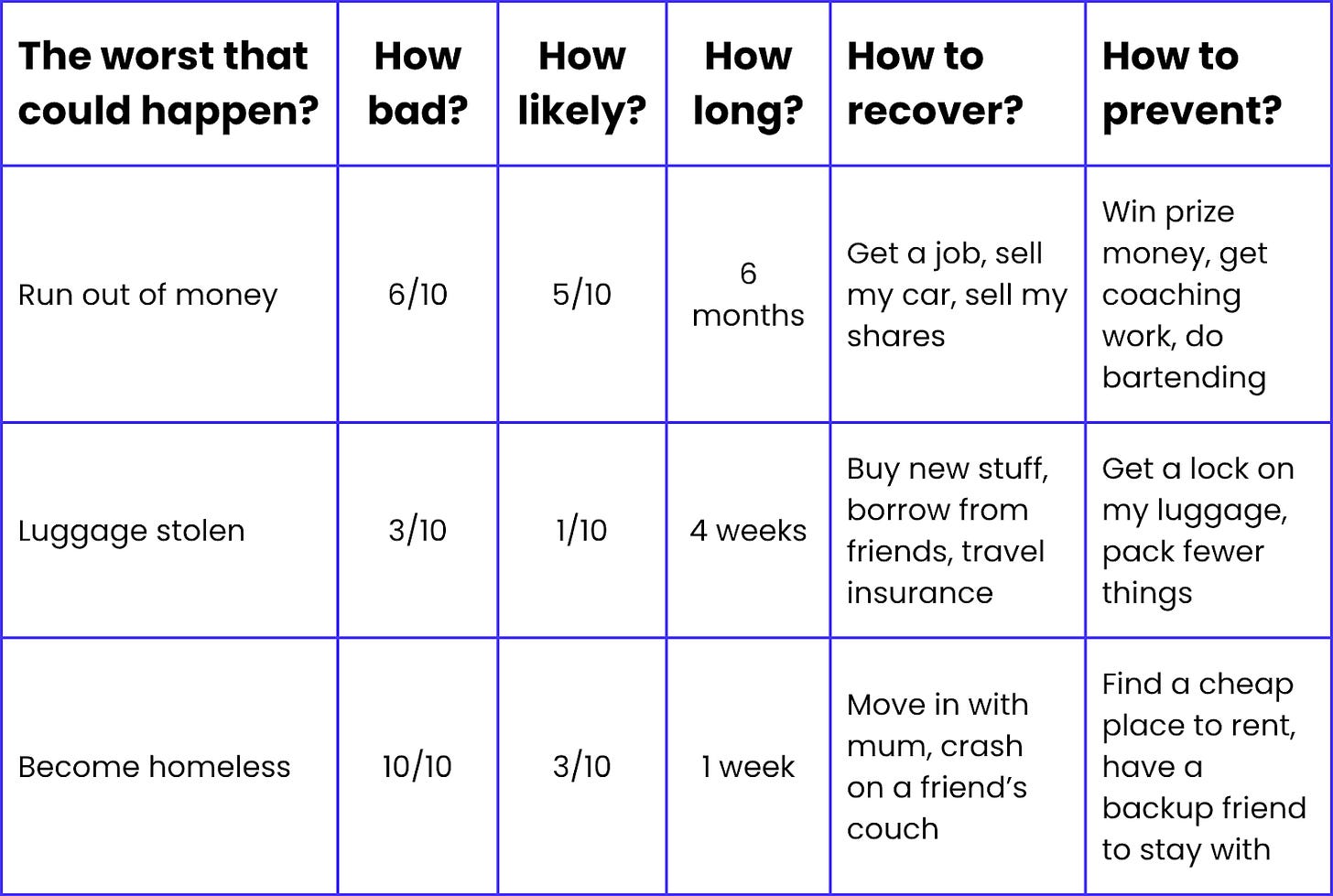
Tim Ferriss does a similar exercise. He talks about it in his TED talk and blog.
List your fears.
Rate how bad they could be.
And how long that pain would last.
Then make a plan to prevent them, or recover from them.
“It’s not because things are difficult that we do not dare; it is because we do not dare that things are difficult.” ~ Seneca
To make brave choices, ask…
What’s the worst that can happen?
Question 2: What if it goes right?
I landed in California without knowing a single person.
No one to play with.
No one to stay with.
I had just $2,000 in my bank account, and only two nights of accommodation booked.
It felt risky. But I asked myself one question:
What if it goes right?
Hermosa beach California is huge. There are hundreds and hundreds and hundreds of beach volleyball courts stretching out of sight, into the haze that is a part of the LA weather.
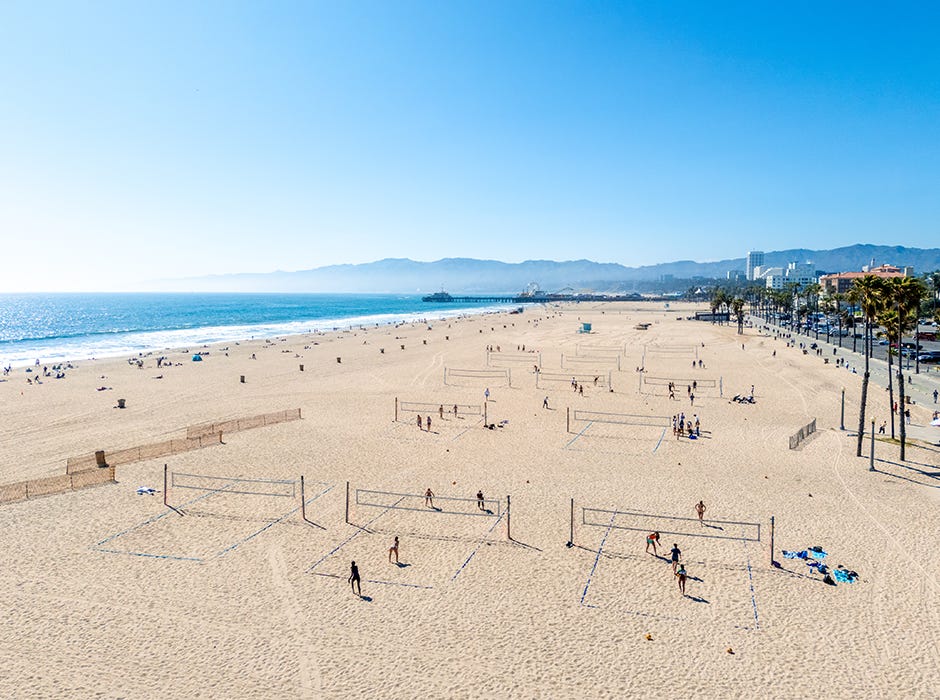
The first morning I arrived I was walking along the beach. Not a relaxing stroll. No. I was a volleyball player, looking intently for a court that had 3 players, and needed a fourth.
I was looking for my way in.
After an hour of scanning the beach. I’d found a possibility. 3 girls had started passing a ball back and forth on a court. I walked up to them.
As an introvert I was already miles outside of my comfort zone. And now the scary part began.
‘Hi…?’ they said. And kind of side eyed me.
‘Hey!’ I gave them a huge smile. ‘I’m Australian, I just flew in today.’ I shamelessly played the Aussie card. American’s love the accent.
‘Oh, welcome to LA then.’ They were hesitant. I would have been too. I’ve lost count of the number of times a random tourist (who can’t play at all!) has asked to join one of my training sessions.
‘It looks like you need a fourth. I could play with you. I play on the National Tour back home,’ I offered. I tried to add every bit of credibility I could.
‘Our fourth is coming,’ one of the other girls jumped in. ‘We don’t need you.’
‘No worries, I’ll just watch you play for a bit then. Have a good session.’ And I backed slowly away.
Straight up rejection.
Ouch.
My first attempt to talk to strangers in a completely new country. It was rough.
I sat down to watch them play. And recover my courage before trying another court.
15 minutes later, the same girl who’d shut me down sheepishly came back over.
‘Our fourth never showed up. Do you want to jump in?’
‘Yes.’ I said, jumping to my feet. ‘I’d love to.’ A second chance.
I played my heart out.
And the next day, they invited me back again.
I was in.
It was the beginning of 8 months in the USA, where I played every single day. Usually twice a day.
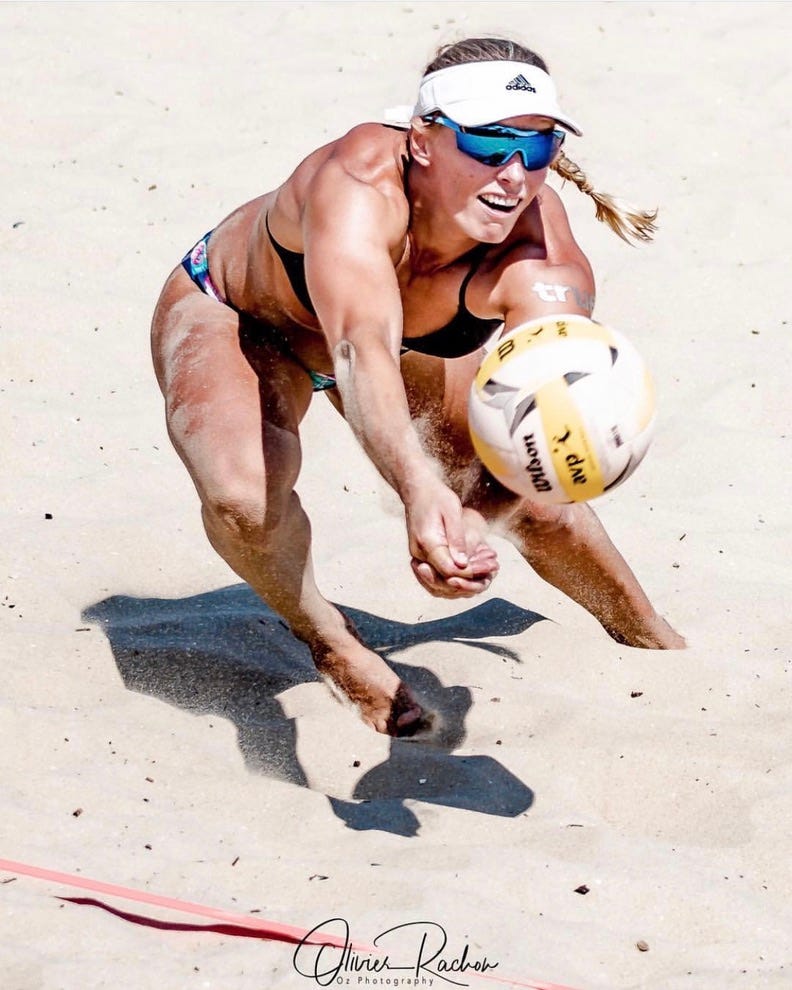
What if it goes right?
“All your dreams can come true if you have the courage to pursue them.” ~ Walt Disney
Our brains are wired to look for risk. To point out what may go wrong.
This question makes your brain flip. It forces us to look for positives.
This is the 3 part structure I use:
1. If everything went right, what is the best case scenario outcome?
Eg. You win the Olympics, get spotted by a big name talent scout at your first gig, are offered investment after doing cold inbound to an investor, win your dream job.
2. Is there value if only some things go right? Is this a pursuit where 2nd place still has value?
Eg. Getting in Harvard is binary - you get nothing if you don’t get in. But starting a business could be successful even if it doesn’t become a unicorn because you’d still make money.
3. What other benefits will I get from the pursuit?
Eg. What skills will I gain? Who might I meet? What credibility will this bring? Will I enjoy the pursuit? Might I inspire others to be brave?
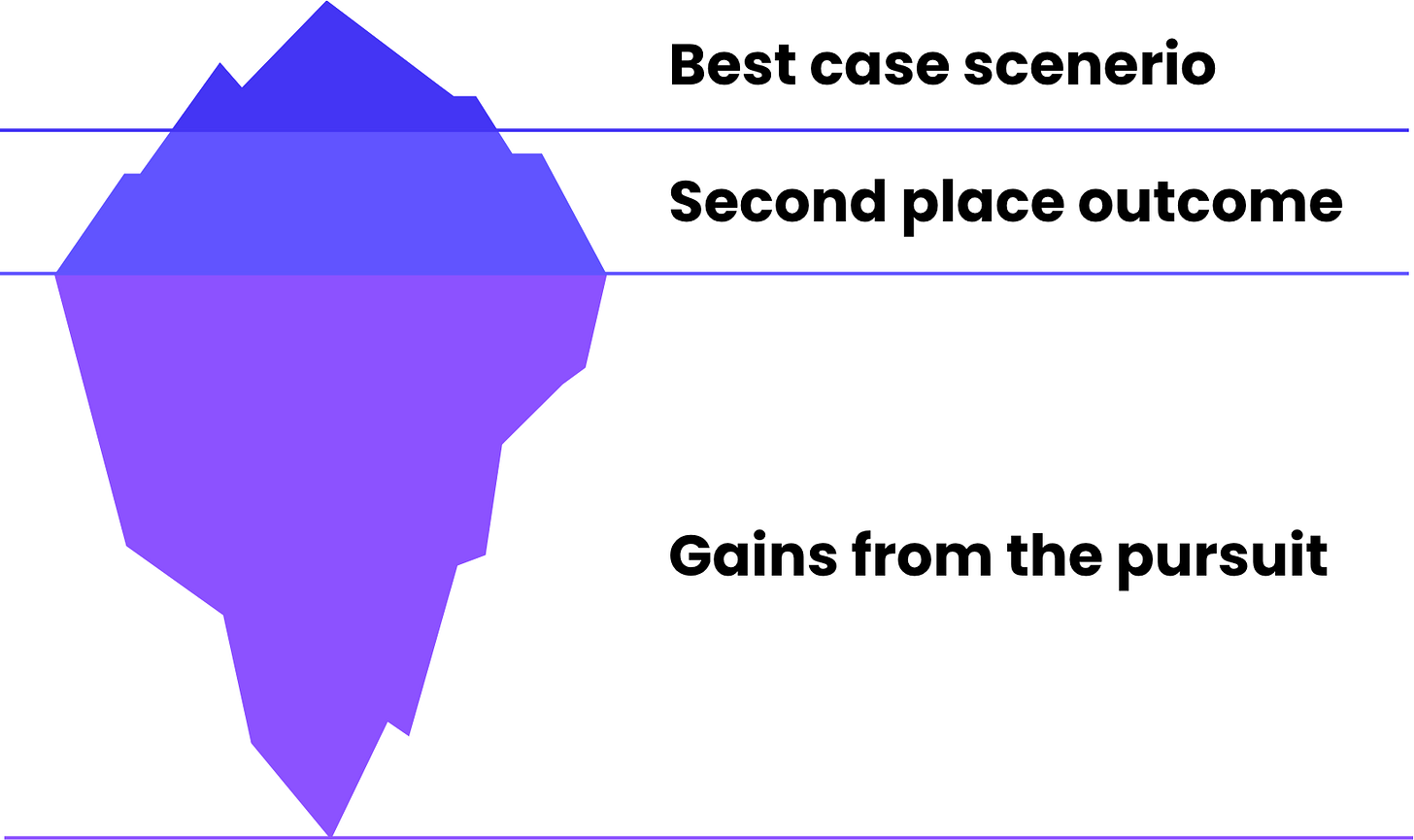
Like an iceberg, many of the benefits of making a brave choice aren’t found at the very top where everything goes right (although it can happen!). There is value below the water where you haven’t looked.
“Let’s say the worst-case scenario actually occurs. There are obviously things you won’t like about it. But what aspects of that scenario are you excited about?” ~ James Clear
To make brave choices ask…
What if it goes right?
Question 3: Who do I want to be?
‘Please play with me’ I sounded desperate.
Let’s be real, I was desperate. Entries to the Hermosa Open, the biggest event on the National Volleyball League Calendar closed tomorrow.
‘I’m not sure…’ Iwona said. Polish originally, she’d come to college in the USA and made her home in California afterwards. She was a free spirit. A gypsy. And a very, very good beach volleyball player.
‘Please. I’d love to play with you.’ I’d been asking her for days now. She was way out of my league.
But… what’s the worst that could happen? She’d say no I’d and I’d have to watch the tournament rather than play.
‘I’ll let you know tonight,’ she said. Down to the wire.
Somehow, I talked her into it. I had no ranking points, so we found ourselves in the qualifier event – the tournament to get into the real tournament. We barely scraped through with a 15-13 win in the third set. I was just happy to make it into the main event.
The next day we lined up against one of the best teams in the tournament.
‘Let’s go for it,’ Iwona said.
‘They’re the number 4 seeds through…’ I replied.
‘So? We play like we’re the best team on court.’
Who do you want to be?
The player that goes after it? Or the player who is beaten before the first serve.
We won that game. A wild upset.
We won our second match.
And our third.
Sometimes, things just go right for you in sport. You play in the zone. It feels easy. When that happens you ride the feeling for as long as you can.
We made it to day 2. Super Sunday. The quarter-finals.
At 8am, Iwona wasn’t at the beach. Our game started in 30 minutes. I had already been stretching for half an hour.
At 8:10, still no sign of my partner. I’d left 8 text messages for her already.
At 8:20… where was she? I had no one to warmup with on the court. I was serving the ball, running under the next and collecting it myself.
At 8:25, I thought we were going to have to forfeit. The other team was looking over, disbelief that someone would just not show up for a quarter final on their face. I kept my face expressionless.
At 8:27… she arrived. In true gypsy style Iwona wasn’t the most reliable with things like time. She had a smile on her face and dance in her step. ‘Ready to play?’ she asked. ‘I can’t wait.’
And the whistle blew.
After a disastrous first set (I was a bundle of stress and she wasn’t warmed up), we won that game in 3 sets.
Then we won the semi.
Next, the final.
It was my first ever US National level tournament.
My first ever final.
We won the first set. A point for point battle, until our opponents made a few small errors right at the end of the set.
The second set was tight – tied at 17 all. We called a time out. We’d been up but had lost a string of points.
It felt like our dream run, in the biggest tournament I’d ever played in, was over.
We were tense. Playing safe.
We didn’t have our mojo anymore.
‘Let’s get excited,’ Iwona said to me
I replied with something inane like ‘You’re playing great, you’re setting really well.’
‘That’s not excitement.’ And she pulled me to my feet, held my hands, and we jumped up and down and screamed and laughed together.
What a magical moment.
Who do you want to be?
I hit a pretty cut shot to win the next point. 18-17. Iwona went back, lined up for a jump serve, and let it rip. ‘The Polish Hammer’ the commentators had been calling her all day. The ball hit the top of the net, paused, and trickled over.
19-17.
She lined up for another serve. Tossed the ball, connected with a grunt, and the ball… hit the top of the net again. Impossible. It hung there, I saw the other team scrambling to get it, disbelief on their faces. And it dropped in.
20-17.
They won the next point.
20-18.
‘One more side-out’ I told myself. I knew the ball would come to me, it had all day.
Who do you want to be?
Pass, set, and swing.
The ball hit the sand in between both players.
Set. Match. And championship.
And my first giant check.
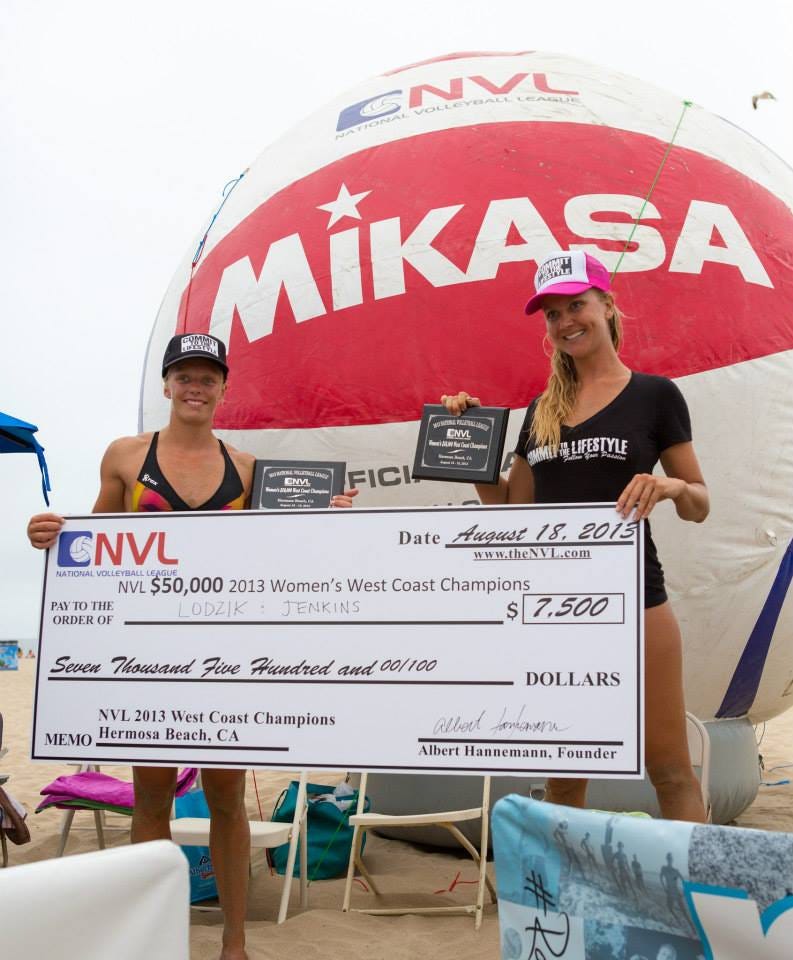
With only 2 years of training, I had no right to win that tournament.
Everyone we beat was better than me.
But sometimes the stars align, a gypsy with an arm swing like a hammer agrees to a partnership, you play in the zone for 2 days straight, and a little luck goes your way when you need it.
Iwona passed away a couple of years later due to complications from a minor surgery.
She taught me to ask this one question.
And every time I do, I remember her.
“The belief that an individual can make a difference is the first step. The next is understanding that you can be that person.” ~ Ryan Holiday
And so the final question you need to make brave choices is simple: Who do I want to be?
- The person who asks, or the person who sits on the sidelines?
- The person who can find joy under pressure, or the person who gets tense?
- The person who goes for the attack, or the person that waits for their opponent to make a mistake?
- The person who says ‘yes’, or the person who looks for reasons to say no?
- The person who shares a crazy idea, or the person who keeps quiet?
- The person who invites feedback, or the person who avoids difficult conversations?
- The person who admits mistakes, or the person who covers up and blames others?
- The person who goes first, or the person who follows the crowd?
- The person who is brave, or the person who remains in fear?
“Screw it, let’s do it” ~ Richard Branson
To make brave choices, ask…
Who do I want to be?
Final thoughts
Sometimes bravery is immediate. You have a heartbeat to react. A moment to speak up.
Sometimes bravery is long term. You have months to mull over a choice. Years to take action.
Remember that bravery = fear + action.
Even for long term options you still need to make decisions. And then to take action. Use these three questions to do so:
- What’s the worst that could happen?
- What if it goes right?
- Who do I want to be?
Make sure you are subscribed to get the final post in this series:
- World-first research on bravery. 7 findings that will overturn your beliefs
- Bravery > confidence: Don’t fear less, brave more
- Bravery is not a feeling, it’s a skill. 5 techniques to master it
- The only 3 questions you need to make brave choices (this post)
- I refuse to talk about impostor syndrome (and you should too)